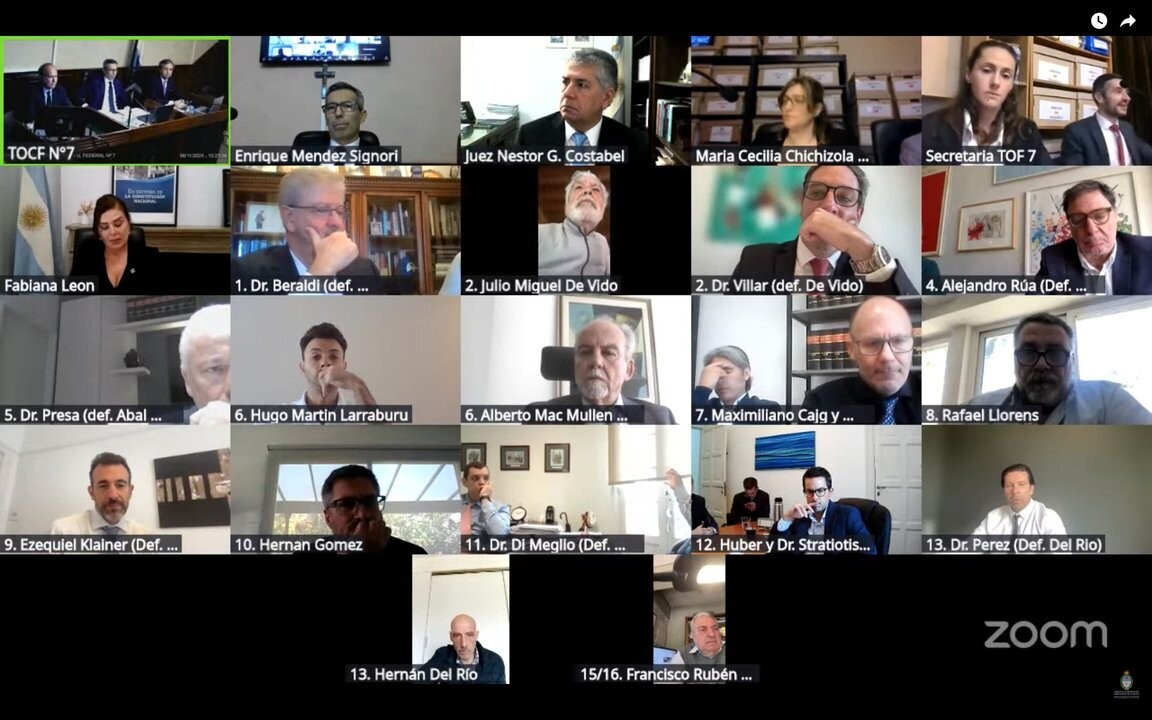
The Oral Federal Court No. 7 in Buenos Aires begins its second week of hearings this Tuesday, where it will conclude the reading of the indictment in the main 'notebooks' case, involving the former driver of Roberto Baratta. The focus is on the testimony of Oscar Centeno, who, as a collaborating defendant, recounted trips, deliveries of bags, and financial movements related, according to him, to an illegal fundraising scheme attributed to former officials of the Planning Ministry. Centeno claimed he started the notebooks to remember addresses but began detailing every movement due to suspicions about suitcases and dollar amounts. His testimony includes days of fundraising, trips with bags, visits to Cristina Kirchner's apartment, and storing the notebooks with a police friend. The former vice president is accused of leading a criminal association and being the ultimate beneficiary of the money, involving her in 175 instances of passive bribery. Following this, the court will formally open the chapter known as 'La Camarita,' which investigates the alleged cartelization of public road works between 2003 and 2015. In this section, 51 businessmen are accused of active bribery, including Carlos Wagner, Angelo Calcaterra, Hugo Dragonetti, Aldo Roggio, and José Cartellone. The testimonies of 'repentant' individuals José López, Wagner, and Ernesto Clarens, considered crucial by the prosecution, describe a 3% to 5% kickback system that served as a revenue source for officials from Planning and National Roads. In his accusation, Prosecutor Carlos Stornelli stated that the scheme operated through 'prior agreements between companies' that determined tender winners, overpricing, and percentages for officials. The case also reaches former officials such as De Vido, José López, Nelson Periotti, Sandro Férgola, and Sergio Passacantando. The Court of Oral Proceedings No. 7 must decide two key issues: whether to enable the summer judicial fair to hold hearings or maintain the judicial break and resume in February, and whether to accept the move to the AMIA Auditorium in Comodoro Py, a hall with a capacity for almost 200 people. The investigative hearings, scheduled for next year, will be the first moment of full in-person proceedings. By then, it is still unknown if the court will continue in a hybrid mode or definitively adopt face-to-face hearings, one of the main demands of the prosecution.